Is an Antigua Coffee Farm Visit Worth It? An Honest Look
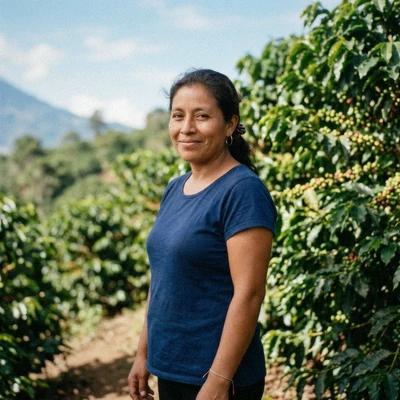
Yes, if you have a free morning, some genuine curiosity about how coffee gets from the tree to the cup, and no problem with a 5 km walk on uneven ground. No, if you are short on time, do not drink coffee, or would rather spend that morning inside Antigua's colonial centre. A coffee-only farm visit runs from $55 to $140 depending on group size and extras, and buys you two to three and a half hours with a grower, a wet mill, a roasting comal, and a fresh cup poured by the person who picked it. What makes a coffee tour in Antigua worth it, or not, comes down to those three things, and this guide runs the real math, the real downsides, and the current volcano situation before you book.
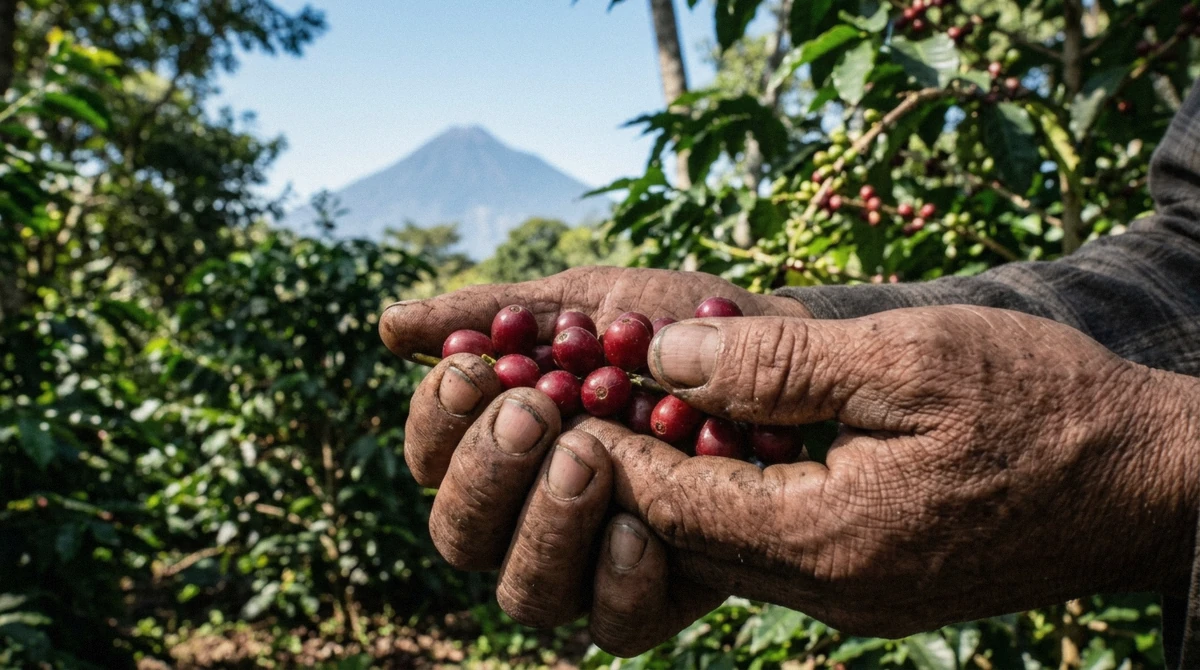
Quick answer
Yes, if you want to see how coffee actually gets made and don't mind a real farm walk. No, if you are pressed for time or coffee isn't your thing. Coffee-only farm visits on coffee farm tours near Antigua run $55 to $140 per person and take two to three and a half hours.
Key takeaways
- Price range: $55 to $140 per person, and the family farm visit at $55 is the cheapest coffee-only option
- Biggest reason to go: the whole plant-to-cup sequence in one morning, from the tree to the roasting comal to your cup
- Biggest honest downside: the farm walk is about 5 km over uneven ground, not a stroll
- Skip it if you don't drink coffee, since 3.5 hours built around one drink is a long sit for a non-drinker
- Best timing: December through March for actual picking, though tours run year round
- Antigua itself is unaffected by the current Fuego activity, and the farms sit on a different volcano, as our volcano section explains
The Short Answer: Worth It If, Skip It If
A coffee farm visit near Antigua earns its price for most travellers who like coffee and want to understand the valley they're standing in, not just look at it. It does not earn its price for everyone, and the honest answer depends more on your own schedule and habits than on which farm you pick.
Worth it if:
- You drink coffee regularly and want to see the actual process behind it, not just read about it
- You have a free morning or afternoon and don't mind spending part of it walking on dirt paths in the sun
- You'd rather spend $55 to $140 on a hands-on farm visit than on another museum or shopping stop
Skip it if:
- You don't drink coffee and have no particular interest in agriculture or how it's grown
- Your Antigua stay is one full day and you'd rather spend it all in the colonial centre itself
- A 5 km walk on loose, sloped ground is genuinely off the table for you physically
The Farm Visits This Verdict Is Based On
The price and experience numbers in this guide come from these three farm visits, spanning the cheapest option to a fuller half-day with extras.
 from $55
Top Rated 5.0★
from $55
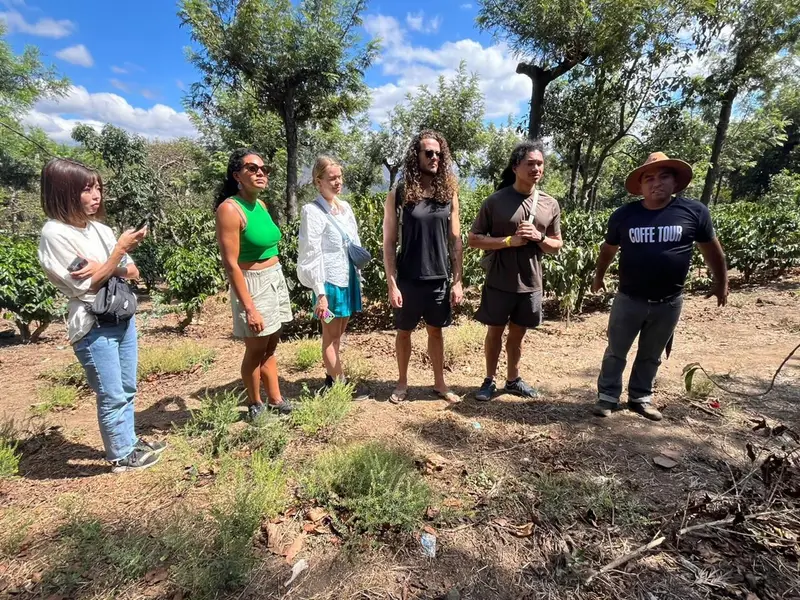
Top Rated 5.0★ Family Coffee Farm Experience
Spend a relaxed morning with the Rivera family at their small coffee farm near Antigua in Ciudad Vieja. Walk the plantation, learn how Guatemala's eight coffee regions grow…
- Visit a small, family-run coffee farm
- Plant-to-cup walkthrough of the coffee process
- Learn about Guatemala's 8 coffee-growing regions
- Fresh coffee tasting with a local grower
 from $75
Coffee + Chocolate 5.0★
from $75
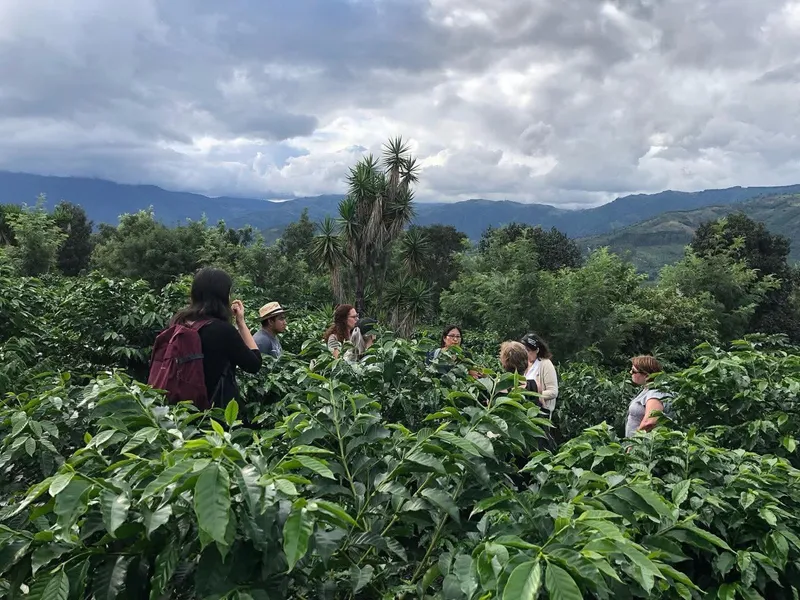
Coffee + Chocolate 5.0★ Antigua Coffee Farm & Chocolate Tour
Climb the slopes of Volcán de Agua to harvest, roast and grind your own coffee beans, then head to an artisanal chocolate shop where French technique meets Maya…
- Coffee farm on the slopes of Volcán de Agua
- Hands-on harvesting, roasting and grinding
- Coffee tasting plus a bag of beans to take home
- Artisanal chocolate shop with cacao tasting
 from $53
Most Popular — 420 Reviews, 4.9★
from $53
Most Popular — 420 Reviews, 4.9★ Antigua ATV Coffee Tour
Ride your own ATV from central Antigua up to historic Finca La Azotea in Jocotenango, learn the seed-to-cup coffee process, then climb to the Cerro de la Cruz…
- Drive your own ATV through Antigua and the countryside
- Guided coffee tour at historic Finca La Azotea
- Panoramic city views from Cerro de la Cruz
- Fresh coffee tasting plus a cacao-to-chocolate sampling
What It Actually Costs
Prices below are per person, in the currency charged at checkout. About 7.6 quetzales to the dollar, checked August 2026, for the quetzal figures in brackets. Last verified: August 2026.
| Option | Typical price | Duration | Best for |
|---|---|---|---|
| Family coffee farm experience | from $55 (Q420) | 3 hours | First-timers who want the plant-to-cup story without extras |
| ATV coffee tour | from $53 (Q405) | 3 hours | Anyone who wants a viewpoint and a livelier pace with the farm visit |
| Hotel-pickup coffee farm tour in Antigua Guatemala | from $69 (Q525) | 3.5 hours | Travellers without their own way to reach Ciudad Vieja |
| Coffee and chocolate tour | from $75 (Q570) | 3.5 hours | Anyone who wants a bag of beans and a chocolate workshop added on |
| Private Hobbitenango and coffee farm tour | from $140 (Q1,065) | 8 hours | Travellers who want the farm plus Hobbitenango in a private vehicle |
Coffee-only farm visits start at $55, and the whole range on this site tops out at $140 for a private full day that adds a mountain-top park on top of the farm. The ATV coffee tour is the cheapest way in at $53, since it folds the farm visit into a shorter, more active format rather than charging extra for it. For the full breakdown of what drives that spread, including tipping, transport and beans to take home, see the Antigua coffee tour prices page.
What You Get for the Money, Step by Step
The shape of a half-day visit is consistent across most of these tours, whichever farm you land on. Pickup from your hotel or a central point in Antigua, then fifteen to thirty minutes to the farm itself, usually on the lower slopes of Volcán de Agua around Ciudad Vieja or San Miguel Escobar, or north to Jocotenango for the larger estates.
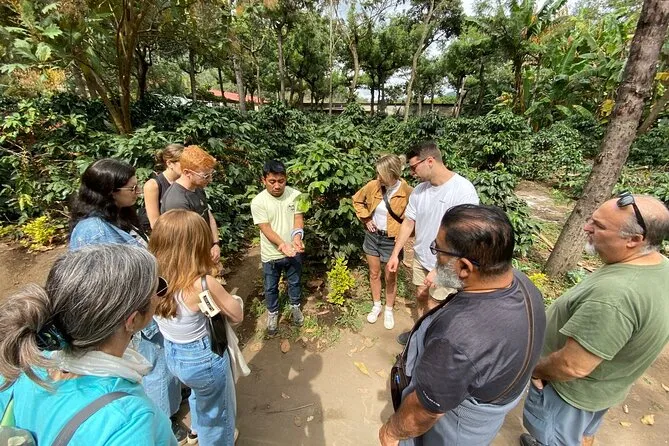
Once there, the grower walks you through the coffee trees themselves: how they're planted under shade, what a ripe cherry looks like against an unripe one, and which varieties are on that particular farm, usually bourbon, caturra or catuaí, all arabica. These farms sit at roughly 1,500 to 1,700 metres, part of why Anacafé, Guatemala's national coffee association, designates Antigua as one of the country's eight official coffee regions. From the trees you move to the wet mill where the cherry pulp comes off, then the drying patio where the beans dry in the sun before roasting.
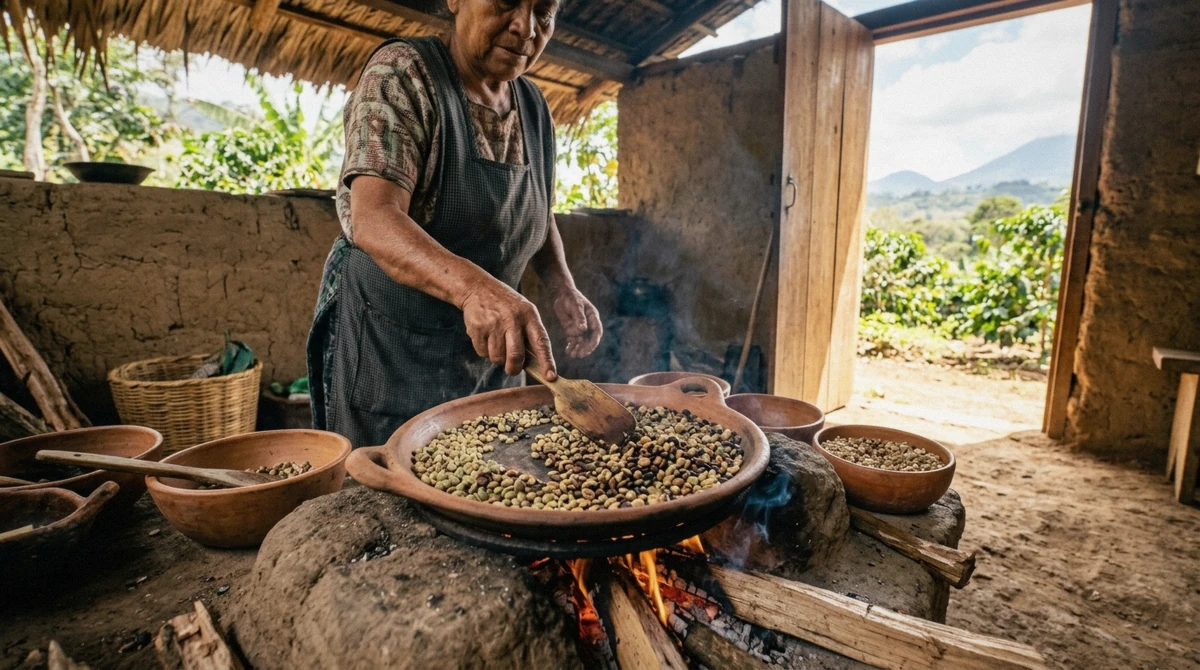
A hand roast over a wood-fired comal comes next, followed by grinding and a tasting, usually at the family's own home rather than a purpose-built visitor centre. Most visits end back in Antigua by lunchtime.
What's included at that price is the guide or grower's time, the farm access itself, and the tasting. What's typically not included is transport to Antigua from the airport, and, on the standard farm visits, a take-home bag of beans, that's a feature specific to the coffee and chocolate tour's format. The ATV coffee tour adds its own ATV ride and a stop at the Cerro de la Cruz viewpoint on top of the same farm-visit core, and the coffee and culture full-day tour folds the same plantation stop into a full day that also covers the Cathedral, La Merced and Calle del Arco.
The Honest Downsides
The walk is real. Farm visits cover about 5 km over uneven ground, loose dirt paths and some steep sections on volcanic slopes. It is not a hard hike for most people, but it is not a flat stroll either, and closed-toe shoes matter more than most travellers expect.
Outside December through March, there is no picking to watch. You still see the trees, the drying patios and the roasting, but the wet mill sits idle and the fields are quiet rather than busy with pickers.
Small-farm visits are hosted, not slick. Timings drift, the pace is set by the family rather than a schedule, and that is part of the appeal for some travellers and a genuine friction point for others who prefer things to run on time.
If you don't drink coffee, three and a half hours built around one drink is a long time to give up. There is agriculture and craft to see, but the whole visit is organised around a beverage you may not care about.
English-language depth varies by farm and by interpreter. On some visits the grower speaks directly and clearly; on others the interpreter is doing most of the explaining, and how much you get out of the visit depends more on that person than on which farm you're standing in.
From May through October, afternoon rain is the pattern rather than the exception, and it can cut a field walk short. Morning departures matter more in those months than the rest of the year.
Pros and Cons
What we genuinely like
- The full plant-to-cup sequence, from the tree to the cup, in one morning
- Small-group and family-run options where you talk directly with the grower
- Genuine access to the Agua-slope villages most visitors never reach
- Runs year round, so it fits most trip dates
The honest downsides
- A real 5 km walk on uneven ground, not a paved path
- No picking to watch outside December through March
- Timings and pacing are informal on small-farm visits
- Not much payoff if you don't drink coffee
Who it's NOT for: Travellers who want a fixed schedule down to the minute, or anyone for whom the walk itself is not physically realistic.
When It Is Worth It Most
December through March is when a farm visit earns the most, since that's when picking is actually happening and the wet mill runs at full tilt rather than sitting idle. Morning departures work best year round, and matter specifically from May through October, when rain tends to arrive in the afternoon and can shorten a field walk. For the full month-by-month breakdown, including temperatures and rainfall, see harvest-season coffee tours in Antigua.
Who Should Do It, and Who Should Skip It
Families with older children generally do well on these visits, since the walk and the hands-on roasting hold interest better than a passive tour would; very young children may find the 5 km walk and the pace of a working farm harder going. First-timers to Guatemala get a genuinely different picture of the country than the colonial centre alone gives. Budget travellers should look at the family coffee farm experience or the ATV coffee tour first, both under $55, before the pricier full-day formats.
Travellers who don't drink coffee at all are the clearest group who should skip it and spend that morning in the Cathedral or Calle del Arco instead.
Should You Book One?
If you drink coffee and want to see how it's actually made
book it, this is exactly what the visit is built for.
If you're visiting December through March
book it now rather than later, this is when there's picking to watch.
If you don't drink coffee and have limited time in Antigua
skip it, spend the morning in the colonial centre instead.
If the 5 km walk is not realistic for you physically
skip the standard farm visits and ask an operator directly about a shorter, less strenuous option.
If you're travelling with a rental car and enjoy figuring things out yourself
read guided Antigua coffee farm visits before deciding, since independent access is real but limited.
Volcano Activity and What It Does Not Affect
Volcán de Fuego entered an intensified eruptive phase on 3 August 2026. CONRED, Guatemala's national disaster authority, declared a national orange alert, and INSIVUMEH, the national volcanology and meteorology institute, reported pyroclastic flows in several ravines and ash columns reaching 5,000 to 6,000 metres above sea level. About 1,700 people were evacuated from communities on Fuego's slopes, and all hiking on Fuego and Acatenango was suspended from 4 August 2026, with no announced reopening date.
We are not going to guess when that changes; check the current bulletin yourself before you travel.
What this does not affect: Antigua Guatemala itself, roughly 16 to 18 km from Fuego, is open and operating normally, and the coffee farms on these tours sit on the Agua side of the valley, a different volcano entirely, outside the Fuego evacuation zone. Light ash fall in Antigua happens occasionally, though it is not constant and it does not close the coffee farms when it does. Before you travel, check INSIVUMEH's daily volcanic bulletin and CONRED's current alerts for yourself rather than relying on any single article, this one included.
How to Book Without Overpaying
Book a few days ahead rather than the same morning, particularly December through March when farms are busiest with picking and small-group slots fill first. A free-cancellation option is worth checking for, since afternoon rain from May through October can genuinely shorten or reshuffle a field walk and you don't want to be locked into a fixed date.
Before you book:
- Confirm whether transport from your hotel is included or an add-on
- Check the cancellation policy against the season you're travelling in
- Ask whether the visit includes a take-home bag of beans if that matters to you
- Bring closed-toe shoes regardless of which tour you pick
Matched to who's booking:
| Traveller type | Best pick | Price |
|---|---|---|
| First-timer, no extras | Family coffee farm experience | from $55 (Q420) |
| Wants a viewpoint and more pace | ATV coffee tour | from $53 (Q405) |
| No hotel transport of their own | Hotel-pickup coffee farm tour in Antigua Guatemala | from $69 (Q525) |
| Wants beans and chocolate too | Coffee and chocolate tour | from $75 (Q570) |
For first-timers who want the clearest plant-to-cup story without extras, the family coffee farm experience is the straightforward pick. For a livelier pace with a viewpoint added, the ATV coffee tour is the cheapest way in at $53. For anyone who wants chocolate alongside the coffee, the coffee and chocolate tour adds a cacao workshop to the same core visit.
To compare Antigua coffee plantation tours side by side before you commit, the homepage lists all six with current prices and ratings.
We'd book a coffee farm visit without hesitating if we drank coffee and had a free morning in Antigua, the plant-to-cup sequence is genuinely worth seeing once, and the family-run visits in particular give you something the colonial centre alone can't. We'd skip it, and feel fine about skipping it, if coffee wasn't our thing or the trip was already packed tight, there's no shame in spending that morning at the Cathedral instead.
Frequently Asked Questions
Is a coffee tour in Antigua Guatemala worth it?
Yes, if you drink coffee and have a free morning, the plant-to-cup sequence from tree to roasting to tasting is genuinely worth the $55 to $140 it costs. If you don't drink coffee or your Antigua time is already tight, the colonial centre alone is a better use of that morning.
What do you actually do on an Antigua coffee farm visit?
Pickup, a short drive to the farm, a walk through the coffee trees with the grower, the wet mill and drying patio, a hand roast over a comal, and a tasting, usually at the family's home. The full step-by-step is above.
Who should skip a coffee farm tour in Antigua?
Anyone who doesn't drink coffee and has limited time, and anyone for whom a 5 km walk on uneven ground is not realistic. Both groups get more value spending that time in Antigua's colonial centre instead.
Is it worth it if you don't drink coffee?
Generally no. There's real agriculture and craft to see, but the visit is built around a beverage, and 3.5 hours centred on something you don't drink is a long sit compared with other ways to spend that time in Antigua.
Is Antigua safe to visit with Fuego erupting?
Antigua itself is open and operating normally; it sits roughly 16 to 18 km from Fuego and the coffee farms are on the Agua side of the valley, a different volcano. Hiking on Fuego and Acatenango is suspended. Check INSIVUMEH's bulletin before you travel.
How long does a coffee farm visit take?
Two to three and a half hours for the standard visits, or a full day, about 8 hours, for the private tour that adds Hobbitenango. Pickup and return transport are on top of the farm time itself.
Is a coffee farm visit good for kids?
Generally yes for older children who can manage the 5 km walk, since the hands-on roasting and grinding tend to hold interest. Very young children may find the walk and the pace of a working farm harder going.