What to Wear and Bring on an Antigua Coffee Farm Visit
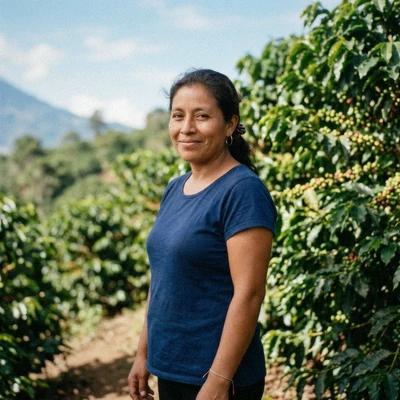
What to wear on a coffee farm tour in Antigua comes down to a short list, since most operators supply almost nothing beyond the visit itself, and what's actually on you is closed-toe shoes, sun protection and a layer for the morning chill. The walk itself is real, about 5 km over uneven volcanic ground, and Antigua sits at roughly 1,530 metres, so the sun does more work than the air temperature suggests. This guide covers exactly what to wear, what to pack, what each farm visit provides, and what changes by season.
Quick answer
Most coffee farm visits around Antigua provide little beyond the tasting itself, some include a small backpack and water, most do not, so your own list is short: closed-toe walking shoes, long trousers, sun protection and a light layer for the morning. Antigua sits at about 1,530 metres, so the sun is stronger than the air temperature suggests, and a rain jacket belongs in the bag from May through October.
Key takeaways
- What's provided: some operators supply a small backpack and water, confirm at booking, most do not
- What's on you: closed-toe shoes, long trousers, sun protection and a light layer, whichever farm visit you book
- Don't wear sandals or smooth-soled shoes, the ground is uneven volcanic soil with loose sections
- Antigua sits at about 1,530 metres, sun exposure is stronger than the air temperature suggests
- Footwear answer in one line: broken-in walking shoes or trainers with real grip
- From May through October pack a light rain jacket, since afternoon rain is the pattern; our guide to the harvest season covers the rest of the calendar
What to Wear, Head to Toe
Base Layer
A breathable t-shirt or long-sleeve top works for most of the day. Quick-dry synthetic fabrics handle the walk better than cotton, which soaks with sweat on the climbs and stays damp once the afternoon cools.
Trousers, Not Shorts
Long trousers are the practical choice on the field walk, they cut down on sun exposure, dust and insect contact as you move through the coffee trees. Shorts are fine in town, but most visitors are more comfortable in trousers once they're actually walking the farm.
Sun Protection
Sun at 1,530 metres is stronger than the air temperature suggests, so a hat, sunscreen and sunglasses matter even on a mild-feeling morning. A long-sleeve top does more of the work than sunscreen alone on the parts of the walk with no shade.
Outer Layer
Mornings from December through February are cool enough for a light layer that most visitors take off by mid-morning as the sun climbs. From May through October, afternoon rain is the pattern, so a light rain jacket is worth packing regardless of how the morning looks.
Footwear
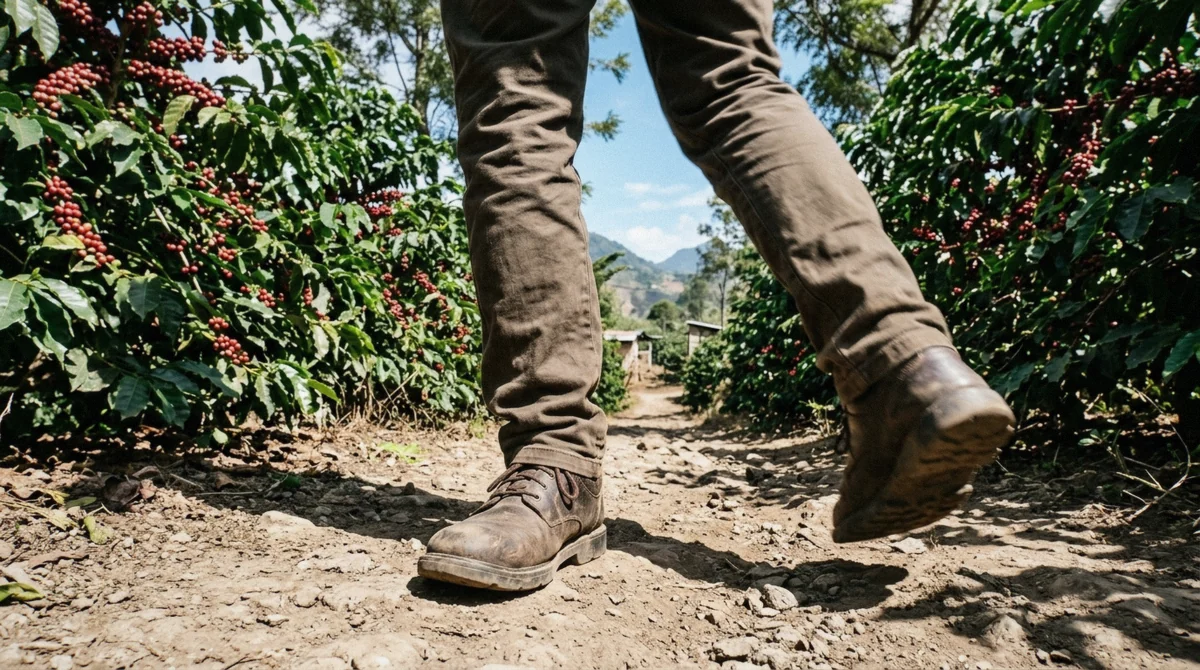
Closed-toe shoes with real grip are the right call, broken-in walking shoes or trainers handle the uneven, loose-dirt and sometimes steep sections of a working farm without trouble. Sandals and smooth-soled shoes are not suitable, the ground has loose sections that punish anything without grip. Barefoot is not an option anywhere on this walk, unlike a soft-sand beach entry elsewhere.
Heels and flip-flops are explicitly the wrong choice, they offer no grip on loose volcanic soil and no protection from the ground itself.
Color choices matter less here than on a water-based tour, but a few practical notes still apply.
| Color | Good? | Why |
|---|---|---|
| White | Mixed | Reflects heat well in full sun, but shows dust from the dirt paths fast |
| Black | Bad in midday sun | Absorbs heat on a warm afternoon walk, fine for a cool morning layer |
| Bright colors | Good | Easier for your guide to keep track of you in a small group on the trail |
| Earth tones | Fine, no real advantage | This isn't a wildlife-viewing walk, so blending in buys nothing |
| Cotton fabric | Bad | Soaks with sweat on the climbs and stays damp once the day cools |
| Quick-dry synthetic | Good | Handles the walk and the temperature swing between morning and afternoon far better than cotton |
| Light, breathable tones | Good | More comfortable than dark fabric once the afternoon sun is direct |
Farm Visits Where This Packing List Applies
The list above and the checklist below apply to any farm walk on this site, these three are a good starting point. The packing list below applies to all of them, from the $55 (about Q420) family farm morning to the $75 (about Q570) coffee and chocolate session, at roughly 7.6 quetzales to the dollar, checked August 2026.
 from $75
Coffee + Chocolate 5.0★
from $75
Coffee + Chocolate 5.0★ Antigua Coffee Farm & Chocolate Tour
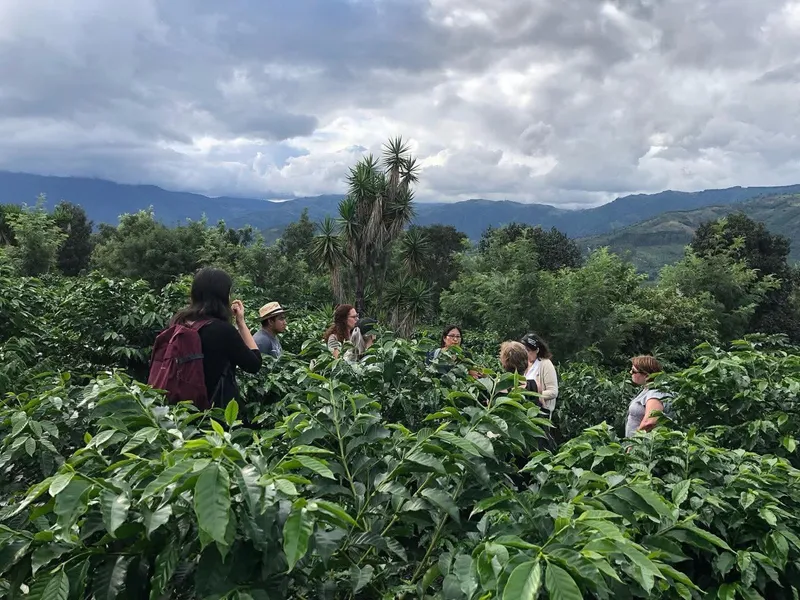
Climb the slopes of Volcán de Agua to harvest, roast and grind your own coffee beans, then head to an artisanal chocolate shop where French technique meets Maya…
- Coffee farm on the slopes of Volcán de Agua
- Hands-on harvesting, roasting and grinding
- Coffee tasting plus a bag of beans to take home
- Artisanal chocolate shop with cacao tasting
 from $77
Full Day · Culture + Coffee
from $77
Full Day · Culture + Coffee Coffee & Culture Full-Day Tour
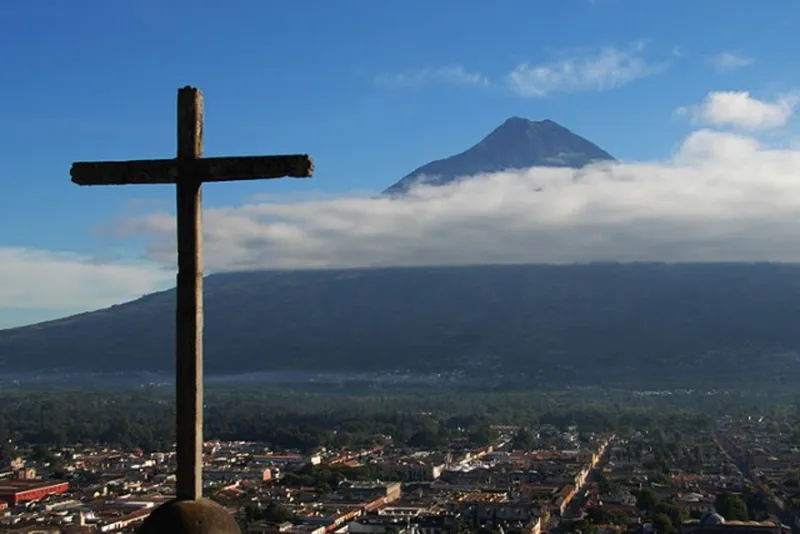
A full day pairing Antigua's colonial highlights with its coffee heritage. Take in the views from Cerro de la Cruz, walk past the Cathedral, La Merced and Calle…
- Cerro de la Cruz viewpoint over Antigua
- Walking tour of churches, monasteries and Calle del Arco
- Lunch at a local restaurant included
- Guided visit to a working coffee plantation
 from $55
Top Rated 5.0★
from $55
Top Rated 5.0★ Family Coffee Farm Experience
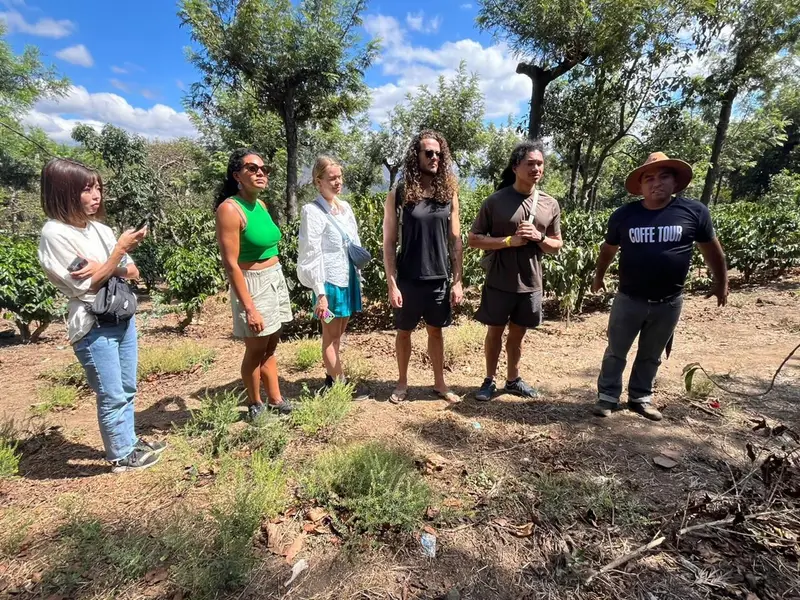
Spend a relaxed morning with the Rivera family at their small coffee farm near Antigua in Ciudad Vieja. Walk the plantation, learn how Guatemala's eight coffee regions grow…
- Visit a small, family-run coffee farm
- Plant-to-cup walkthrough of the coffee process
- Learn about Guatemala's 8 coffee-growing regions
- Fresh coffee tasting with a local grower
Footwear on Volcanic Ground
A typical farm walk covers about 5 km over uneven ground, loose dirt paths and some steep sections, all on volcanic slopes. It isn't strenuous for most people, but it isn't flat either, and the terrain is where footwear choice actually matters most. Broken-in walking shoes or trainers with grip handle it well.
Hiking boots are not necessary for a half-day farm visit, they're more than the terrain calls for, but anything with a worn-smooth sole or an open toe is a genuine mistake here.
Altitude at 1,530 metres is mild, most people feel nothing beyond mild breathlessness on the steeper stretches. This is general information, not medical advice, and anyone with a heart or breathing condition should raise it with the operator when booking.
The Packing Checklist
- Closed-toe walking shoes with grip, broken in, not new out of the box
- Long trousers, quick-dry if you have them, for sun, dust and insects
- Hat, brimmed if possible, sun at 1,530 metres is stronger than it feels
- Sunscreen, reapply if the visit runs long
- Light rain jacket, May through October when afternoon rain is the pattern
- A light layer for December through February mornings, easy to remove by mid-morning
- Water bottle, most operators do not supply water, confirm at booking
- Cash in quetzales, small farms and market stalls rarely take cards
- Phone or camera, charged, for the roasting and tasting steps
- A small daypack if your operator does not supply one, confirm at booking
- Insect repellent, useful on the field walk through the trees
- A change of socks if rain is likely, dry feet matter more than dry everything else
What the Farm Visits Provide and What Is on You
Provisions vary by operator, so confirm at booking rather than assuming. Last verified: August 2026.
| Item | Usually Provided | Bring Your Own | Notes |
|---|---|---|---|
| Guide / interpreter | Yes | No | English-Spanish interpretation is part of every visit on this site |
| Coffee tasting | Yes | No | Included on every farm visit, fresh at the grower's home on the family coffee farm experience |
| Small backpack and water | Sometimes | Confirm at booking | Some operators supply a small backpack and water, most do not |
| Closed-toe shoes | No | Yes | No operator on this site supplies footwear, bring your own |
| Sun protection | No | Yes | Hat and sunscreen are entirely on you |
| Rain jacket | No | Yes | Needed May through October, no operator provides one |
| Chocolate-making materials | Yes, the Antigua coffee farm and chocolate tour only | No | The coffee farm and chocolate tour supplies the cacao workshop kit |
| Lunch | Yes, the coffee and culture full-day tour only | No | The coffee and culture full-day tour includes a restaurant lunch, others do not |
| Bag of roasted coffee to take home | Yes, the Antigua coffee farm and chocolate tour only | No | Part of the harvest-roast-grind experience on that tour |
| Transport from your hotel | Varies by tour | Confirm at booking | Hotel pickup is included on some tours, not all |
What Not to Wear or Bring
- Sandals or flip-flops, no grip on loose volcanic soil and no protection from the ground
- Smooth-soled shoes of any kind, the same grip problem as sandals
- Cotton clothing as your main layer, it soaks with sweat and stays damp once the day cools
- Jewelry you'd mind losing or catching on branches during the field walk
- A large suitcase or anything you can't carry comfortably for a few hours
- Valuables you don't need for the visit, leave them at your hotel
- Heavy hiking gear, the terrain doesn't call for boots or trekking poles
Packing by Season
Antigua's dry season runs November through April, wet season May through October. Full month names, real numbers, checked against local climate normals.
| Season | Conditions | Wear this |
|---|---|---|
| December to February | Cool mornings, about 11 to 15°C (52 to 59°F), warming through the day | A light layer for the morning, removable by mid-morning, plus the standard sun kit |
| March to April | Warm afternoons, about 25 to 28°C (77 to 82°F) | Breathable base layer, hat and sunscreen, no extra layer needed |
| May to October | Clear mornings, afternoon rain the typical pattern | Light rain jacket packed regardless of how the morning looks |
| November | Transition into the dry season | Standard sun kit, a light layer for early starts, rain jacket optional |
Tours run year round, and outside December through March there is no picking to watch. What you miss is the harvest itself, the processing patios and the wet mill still run, and the packing list above holds regardless of the month. For the full season-by-season breakdown of when to go, see when's the best time for a coffee farm tour in Antigua.
Cameras, Phones and the Tasting Table
Bring a charged phone or camera, the roasting step, hand-turning beans over a comal, and the tasting at the end are the moments most visitors want to photograph. Nothing about a coffee farm visit puts your phone at real risk of water damage the way a boat trip would, but dust on the field walk is real, so a simple case or a pocket that zips shut is worth having. Keep your phone in a pocket rather than in your hand on the steeper, looser sections of the walk.
Cash, Documents and Small Practicalities
Carry quetzales in small bills. Cash is what small farms, tuk-tuks and market stalls take, and card acceptance is normal in Antigua's restaurants and hotels but patchy once you're at village level. A bag of single-farm coffee bought at the farm is a natural thing to want to take home, budget for it in cash.
Bring your ID or a copy of your passport, most operators don't ask for it on a half-day farm visit, but it's a reasonable habit while traveling in Guatemala regardless.
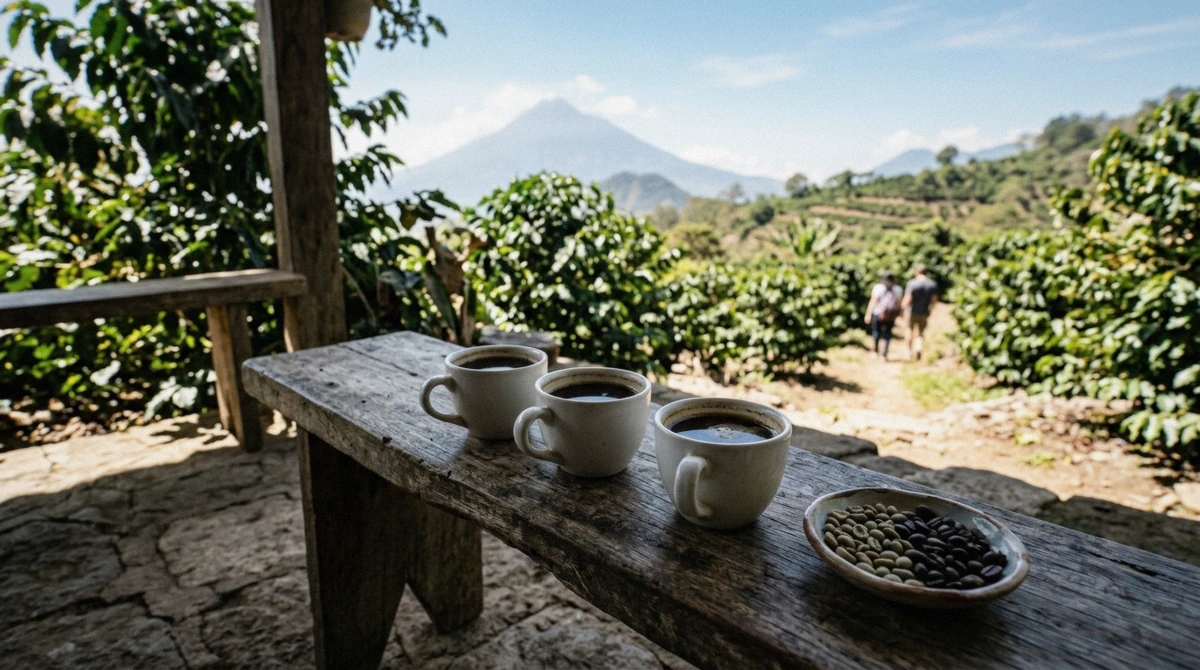
None of this is a long list, and that's the point. Tours handle the guide, the interpretation and the tasting, what's left on you is footwear, sun protection and a layer for whichever season you're visiting in. Pack light, wear shoes with grip, and the rest of the visit takes care of itself.
Frequently Asked Questions
What should you wear on a coffee farm tour in Antigua?
Closed-toe walking shoes with grip, long trousers, sun protection and a light layer for the morning. The farm walk covers uneven volcanic ground, so footwear matters more than any single clothing choice.
Do you need hiking boots?
No. Broken-in walking shoes or trainers with real grip handle the terrain fine for a half-day visit. Hiking boots are more than the walk calls for.
How much walking is there?
A typical farm walk covers about 5 km (3.2 miles) over uneven, sometimes steep volcanic ground. It's not strenuous for most people, but it isn't flat either.
Should you bring rain gear?
Yes, from May through October, when afternoon rain is the typical pattern. A light rain jacket packs small and is worth having regardless of how the morning looks.
What should you not wear?
Sandals, flip-flops or any smooth-soled shoe, the ground has loose volcanic sections with no grip for open or slick footwear. Cotton as your main layer is also a poor choice, it stays damp once the day cools.
Do tours provide water?
Some operators supply a small backpack and water, most do not. Confirm with your operator at booking and bring your own bottle if unsure.
How much cash should you carry?
Enough quetzales for tips, a bag of coffee at the farm and anything bought along the way. Small farms and village-level stalls rarely take cards, even where restaurants and hotels in Antigua itself do.