Best Time for an Antigua Coffee Farm Visit: Harvest Month by Month
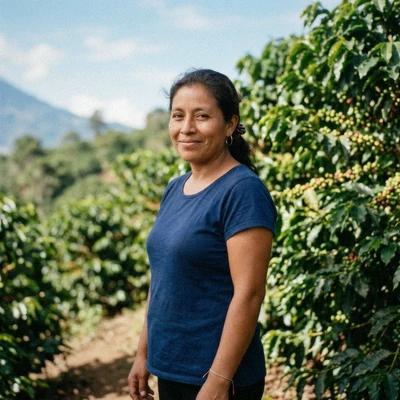
The best time for a coffee farm visit in Antigua is December through March, harvest season around the valley, and that stretch is when a farm visit shows you the most: ripe cherries on the tree, the wet mill running, pickers moving through the rows. The dry season, November through April, is also simply the more comfortable window to be outdoors on a farm walk. Tours run year round though, and outside those months you still see the trees, the drying patios and the roasting, just without the picking itself. This guide runs the real month-by-month conditions so you can time a visit around what actually matters to you.
Quick answer
December through March is harvest season around Antigua, and the dry season, November through April, is the most comfortable stretch for a farm walk. Outside those months tours still run, you just won't see picking.
Key takeaways
- Best window: December through March, when picking is actually happening
- Runner-up: November and April, dry and comfortable but at the edges of picking season
- Month to avoid if you want to see harvest: any month May through October, when the wet mill sits idle
- Counterintuitive fact: afternoon rain, not the season overall, is what actually disrupts a farm walk from May through October
- Best time of day: morning departures, especially May through October, before afternoon rain arrives
- Tours run year round and cost the same whichever month you book
Seasons at a Glance
The Verdict column below is a plain read: what each month is actually good for on a coffee farm visit, given typical conditions. Full month names throughout, since abbreviations invite confusion here.
| Month | Farm conditions | Weather | Verdict |
|---|---|---|---|
| January | Harvest in full swing, driest month of the year | Dry, clear mornings and afternoons | Best overall |
| February | Harvest continuing, cool nights | Dry | Best overall |
| March | Harvest winding down on most farms, warmest afternoons begin | Dry, warming up | Excellent, harvest still visible on many farms |
| April | Some farms still picking, harvest largely finished | Dry, warmest month before the rains | Good, dry but harvest mostly over |
| May | No picking, trees in growth phase | Wet season begins, afternoon rain | Good with a morning start |
| June | No picking, wet mill idle | Wet, afternoon rain pattern | Fine, plan a morning visit |
| July | No picking, trees green and full | Wet, afternoon rain pattern | Fine, plan a morning visit |
| August | No picking, trees green and full | Wet, afternoon rain pattern | Fine, plan a morning visit |
| September | No picking, wettest month of the year | Wet, heaviest rainfall | Least ideal, mornings still workable |
| October | No picking, tail end of the rains | Wet, tapering off | Fine, plan a morning visit |
| November | Pre-harvest, dry season begins | Dry season starts | Very good, comfortable and quiet |
| December | First ripe cherries appear late in the month | Dry, cool nights | Excellent, harvest starting |
Read plainly: December through March is the harvest block and also the dry season's core, which is why it dominates the Verdict column. Outside that window the farm itself does not close, the trees, the drying patios and the roasting demonstration are unaffected by season, what changes is whether there's picking to actually watch. The harvest-season coffee tours in Antigua currently running are listed on the homepage with dates and prices.
Tours That Run Well in Any Season
These three farm visits run year round and include enough beyond the picking itself, tasting, a hosted walkthrough, a colonial-centre circuit, to still be worth booking outside harvest. Prices do not move with the season here, so a harvest-month visit costs the same as an August one: the family farm morning is $55 (about Q420) and the extended Ruta del Cafe visit with hotel pickup $69 (about Q525), at roughly 7.6 quetzales to the dollar, checked August 2026. What changes is what is happening on the farm when you arrive.
 from $69
Small Group 4.9★
from $69
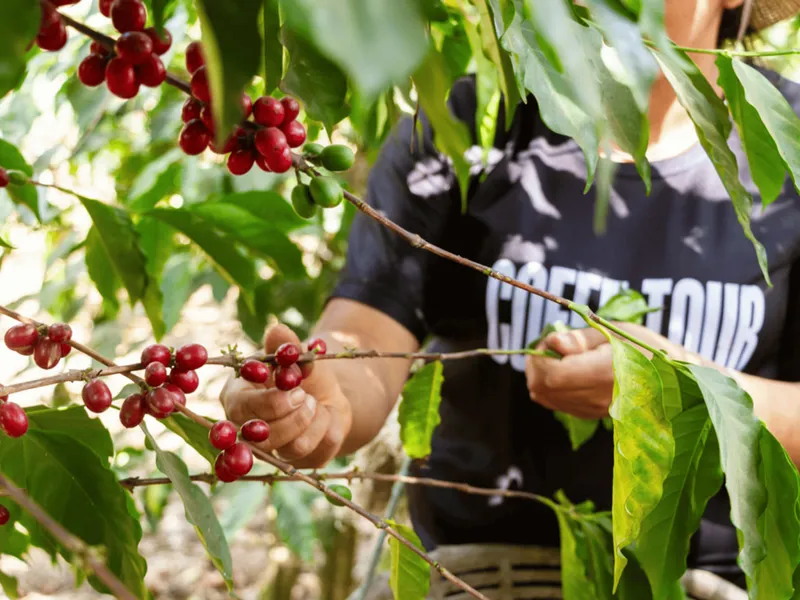
Small Group 4.9★ Coffee Tour in Antigua Guatemala (Rivera Farm)
An extended half-day on the Ruta del Café with farmer Baudilio and his family. Enjoy hotel pickup, explore the fields stage by stage, and dig deeper into the…
- Hotel pickup and an extended 3.5-hour visit
- Hosted by the farmer and his family
- Detailed look at planting, processing and varieties
- Fresh farm tasting along the Ruta del Café
 from $75
Coffee + Chocolate 5.0★
from $75
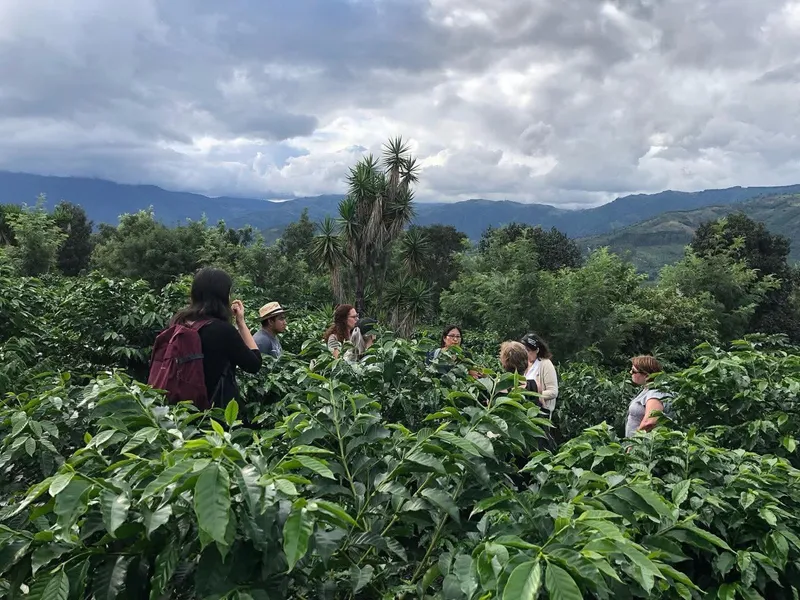
Coffee + Chocolate 5.0★ Antigua Coffee Farm & Chocolate Tour
Climb the slopes of Volcán de Agua to harvest, roast and grind your own coffee beans, then head to an artisanal chocolate shop where French technique meets Maya…
- Coffee farm on the slopes of Volcán de Agua
- Hands-on harvesting, roasting and grinding
- Coffee tasting plus a bag of beans to take home
- Artisanal chocolate shop with cacao tasting
 from $77
Full Day · Culture + Coffee
from $77
Full Day · Culture + Coffee Coffee & Culture Full-Day Tour
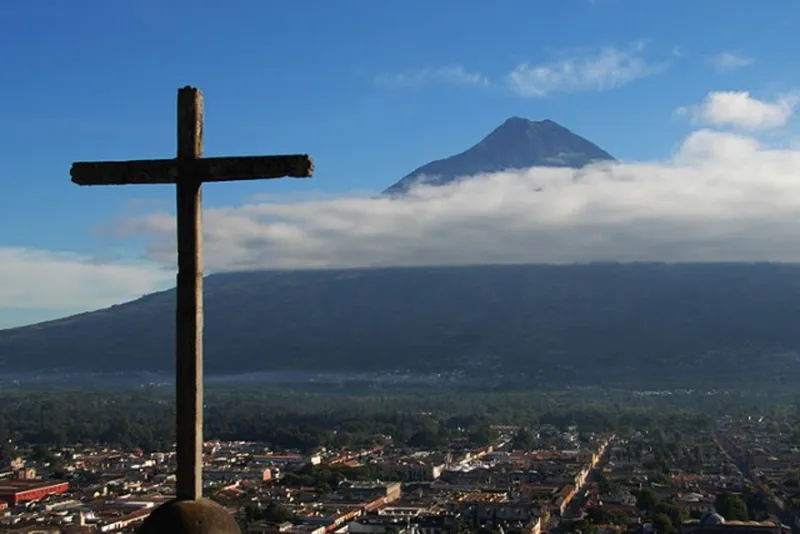
A full day pairing Antigua's colonial highlights with its coffee heritage. Take in the views from Cerro de la Cruz, walk past the Cathedral, La Merced and Calle…
- Cerro de la Cruz viewpoint over Antigua
- Walking tour of churches, monasteries and Calle del Arco
- Lunch at a local restaurant included
- Guided visit to a working coffee plantation
Harvest Season (December to March)
This is the window most worth planning around if watching the actual work matters to you. The first ripe cherries typically appear in late December, and picking continues through the dry season's core, into March on most farms and sometimes April on a few. Sources differ on the exact edges of the season, so treat it as roughly December through March, sometimes into April, rather than a fixed calendar date.
Conditions in these months:
- Dry throughout, January is the driest month of the year
- Cool nights, roughly 11 to 15°C (52 to 59°F) from December through February
- Warming afternoons by March, into the 25 to 28°C (77 to 82°F) range that continues into April
- The wet mill and drying patios are actually in use, not sitting idle
Coffee tour in Antigua Guatemala, the hotel-pickup format, runs its extended 3.5-hour visit well in this window, since there's simply more happening on the farm to walk through. The full-day coffee and culture tour, which pairs the plantation stop with the colonial centre, is also at its best in these dry, settled months rather than a rainy-season afternoon.
The Shoulder Months (April and May)
April sits at the tail of harvest on some farms and the start of the dry season's warmest stretch, afternoons commonly run 25 to 28°C (77 to 82°F). A few farms are still picking into April, though most have finished by then, so it's a reasonable but not guaranteed month to catch the tail end of harvest.
May marks the start of the wet season. Mornings are still typically clear, with rain arriving in the afternoon, so a farm visit booked for the morning largely dodges the change in weather. Trade-off honestly: no picking to watch, but also thinner crowds than the peak harvest months and a genuinely comfortable morning.
Green Season (June to October)
June through October is the wet season, and the trees are at their greenest and fullest during this stretch, even without cherries to pick. Rain follows a consistent pattern: mornings are usually clear, rain arrives in the afternoon. That single fact is why morning departures matter more in these months than any other consideration.
September is the wettest month of the year, with average rainfall of about 309 mm, noticeably more than any other month. It does not make a farm visit impossible, a morning departure still generally works, but it is the month where an afternoon booking carries the most real risk of being cut short by rain.
The trade-off for green-season visitors: no harvest to watch, but a genuinely different, lusher look at the same trees, and typically the quietest months on the calendar.
November, the Turn of the Season
November is when the dry season begins and the rains taper off. It sits just ahead of harvest, so there's no picking yet, but conditions are already comfortable and dry, and it avoids both the September rain peak and the busier heart of harvest season. For travellers who want dry, pleasant conditions without the harvest-season crowds, November is a genuinely good pick, honestly closer to a quiet warm-up than the main event.
Temperature and Rainfall by Month
Antigua's mean annual temperature runs about 17.7°C (64°F), a highland climate with genuinely cool mornings and warmer afternoons rather than dramatic swings between months. Figures below are typical, not fixed; treat the numbers we do have as anchors and the rest as consistent with the same mild, highland pattern.
| Month | Typical conditions | Rain |
|---|---|---|
| January | Cool nights (11-15°C / 52-59°F), mild days | Driest month, about 10 mm average |
| February | Cool nights (11-15°C / 52-59°F), mild days | Low, dry season |
| March | Warming toward 25-28°C (77-82°F) afternoons | Low, dry season |
| April | Warm afternoons, 25-28°C (77-82°F) | Low, dry season |
| May | Mild, mean near the 17.7°C (64°F) annual average | Rising, wet season begins, mornings usually clear |
| June | Mild, mean near the annual average | Moderate to high, afternoon pattern |
| July | Mild, mean near the annual average | Moderate to high, afternoon pattern |
| August | Mild, mean near the annual average | Moderate to high, afternoon pattern |
| September | Mild, mean near the annual average | Wettest month, about 309 mm average |
| October | Mild, mean near the annual average | High, tapering by month's end |
| November | Mild, cooling toward December's night lows | Low, dry season begins |
| December | Cool nights (11-15°C / 52-59°F), mild days | Low, dry season |
By the actual numbers: September is the wettest month at about 309 mm average, January the driest at about 10 mm, and December through March all stay under roughly 5 mm of average monthly rain. Figures are climate normals for Antigua Guatemala; check the current forecast close to your travel dates rather than relying on seasonal averages alone.
Best Season by Traveller Type
If you specifically want to see picking
go December through March, the only window with actual harvest underway.
If you want dry, comfortable conditions without harvest-season crowds
November is the quiet, dry pick just ahead of the main season.
If you're budget-flexible and don't mind afternoon rain risk
June through August still runs every tour normally, just book a morning slot.
If your dates are fixed for September
book a morning departure specifically, since that's the single wettest month and afternoons carry the most risk of a cut-short walk.
If you want warmth without full harvest crowds
April offers the warmest dry-season afternoons with the harvest mostly winding down rather than at its peak.
Best Time of Day
Morning is the clear answer, and it matters most from May through October. The pattern in those months is consistent: mornings are usually clear, and rain arrives in the afternoon. Booking a morning departure means the field walk, the part of the visit most exposed to weather, happens before the rain, not during it.
Quick check before you book, whatever the month:
- Morning slot if travelling May through October
- A light layer for December through February mornings
- A light rain jacket if travelling May through October
- Sunscreen and a hat year round, sun at this altitude is stronger than the temperature suggests
During harvest season, December through March, time of day matters less since the weather is dry and settled most days, but morning departures still tend to be cooler and more comfortable for the walk itself, given nights and early mornings run 11 to 15°C (52 to 59°F) in that stretch. Whichever season you book, what to wear on an Antigua coffee farm walk covers the footwear and layers that matter more than the exact month.
What Harvest Actually Looks Like on the Farm
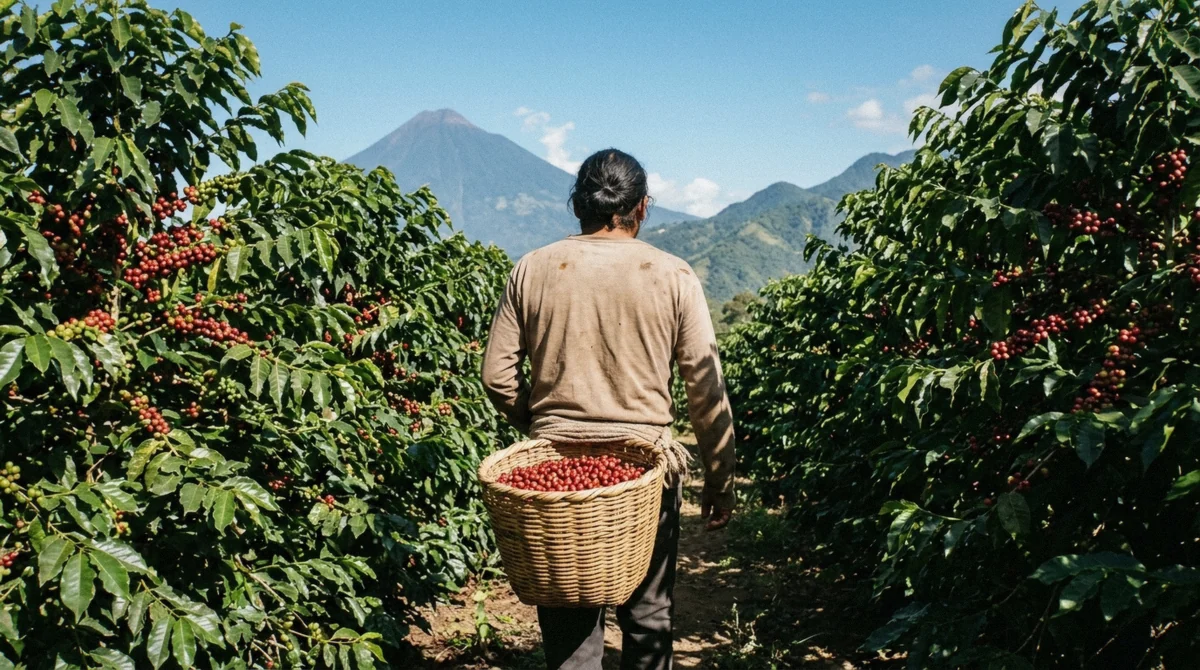
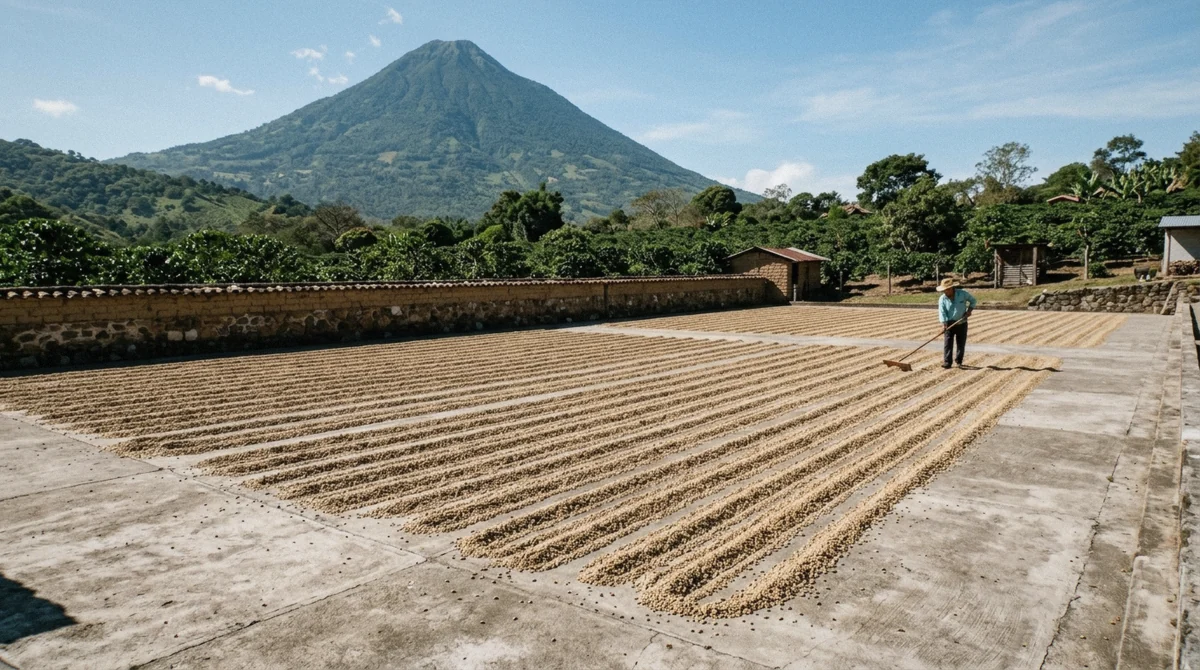
During December through March, a visit adds a layer the rest of the year doesn't have: pickers moving through the rows selecting only the ripe red cherries, sacks filling at the edge of the field, and the wet mill actually processing that day's pick rather than sitting empty. The grower can point to cherries at different stages on the same branch, since ripening isn't uniform even within one plant, and explain how picking crews decide what's ready.
Outside harvest, the sequence is the same minus that one layer: the trees, the empty drying patios, the roasting and grinding demonstration, and the tasting all still happen. What's missing is the sense of a farm mid-work, replaced by a quieter, more explanatory pace. Neither is a lesser visit, they're simply different, and worth knowing which one you're booking.
For the full honest breakdown of what a visit involves either way, see is an Antigua coffee farm visit worth it.
If your dates are flexible, December through March gives you the most to see. If they're not, don't let that stop you: coffee farm visits running this month still show you the same trees, the same wet mill and drying patio, and the same tasting, whatever the calendar says. Book a morning slot outside the dry season and you'll rarely notice the difference.
Frequently Asked Questions
When is the coffee harvest in Antigua Guatemala?
Roughly December through March, with the first ripe cherries appearing in late December and some farms still picking into April. Sources vary on the exact edges, so treat it as an approximate window rather than a fixed date.
What is the best month for a coffee farm visit near Antigua?
January or February, both squarely inside harvest and the driest, coolest months of the year. March is a close third, with harvest still visible on many farms.
Can you pick coffee cherries yourself as a visitor?
Farm visits centre on watching the process rather than doing the picking yourself, though the exact hands-on level varies by farm; ask when booking if picking cherries yourself matters to you.
Is the rainy season a problem for a coffee farm visit?
Not really, if you book a morning slot. Rain from May through October reliably arrives in the afternoon, so mornings stay clear across the wet season.
What is the weather like in Antigua for a farm visit?
Mild overall, mean annual temperature about 17.7°C (64°F). Nights run cool, 11 to 15°C (52 to 59°F) from December through February, while March and April afternoons warm to 25 to 28°C (77 to 82°F).
Is it worth visiting a coffee farm outside harvest season?
Yes. Tours run year round and cost the same; you still see the trees, drying patios, roasting and tasting, you simply miss the picking itself and the wet mill running.
Morning or afternoon, which is better for a coffee farm tour?
Morning, especially from May through October when afternoon rain is the pattern. In the dry season, December through March, timing matters less, though mornings are still cooler and more comfortable.